Did you know the greatest effects of skin ageing are related to differences in your skin tone type? This post discusses the types, challenges, and skincare tips for each.
Skin Tone & Types
Fitzpatrick Scale
The Fitzpatrick scale classifies skin tones into six types, ranging from very fair skin that always burns in the sun (Type I) to very dark skin that never burns (Type VI). This is primarily based on how the skin reacts to sun exposure and its tendency to burn or tan.
Origin:
The Fitzpatrick skin type system was developed by a Harvard dermatologist in the 1970s. It is used as a measurement tool to determine and classify how different skin types react to ultraviolet light (UV). The Fitzpatrick system takes into account, genetic makeup and reaction to sun exposure (burning and tanning and how it affects the skin).
Purpose:
Primarily used by dermatologists, and skincare formulators, to determine the best treatment options for skin conditions based on how the skin will react to treatments depending on its pigmentation and sun sensitivity.
Limitations:
Critics argue that the Fitzpatrick scale is not inclusive enough for diverse skin tones, particularly within darker skin types.
Important consideration:
When determining your Fitzpatrick skin type, it’s crucial to consider your natural skin colour, how your skin reacts to sun exposure (burning vs. tanning), and your family history.
Types 1 to 6

- Type I: Very fair, always burns, never tans, often with red or blonde hair and blue/green eyes.
- Type II: Fair, burns easily, tans poorly, usually with light hair and blue eyes.
- Type III: Medium, tans after an initial burn, may have brown hair and brown eyes.
- Type IV: Olive, tans easily, rarely burns, typically with dark hair and brown eyes.
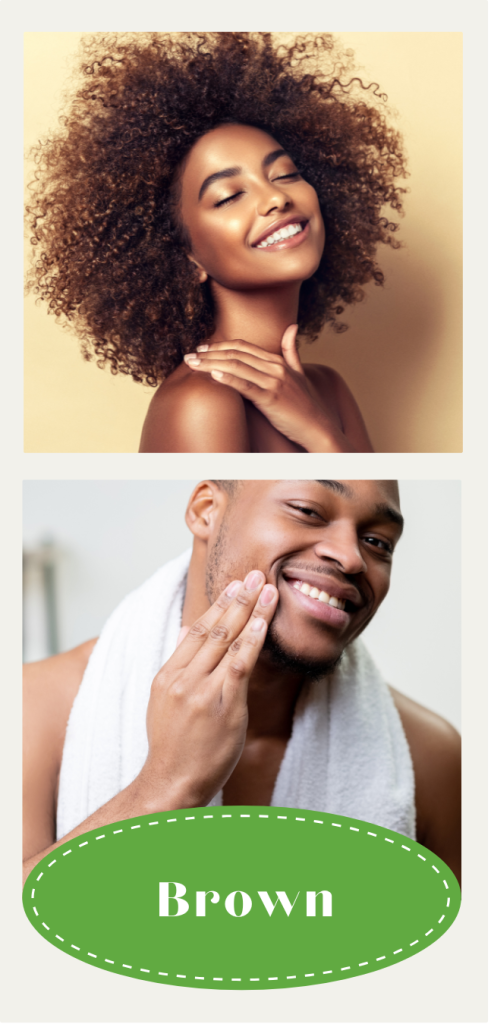
- Type V: Brown, tans readily, very rarely burns, usually with dark hair and brown eyes.
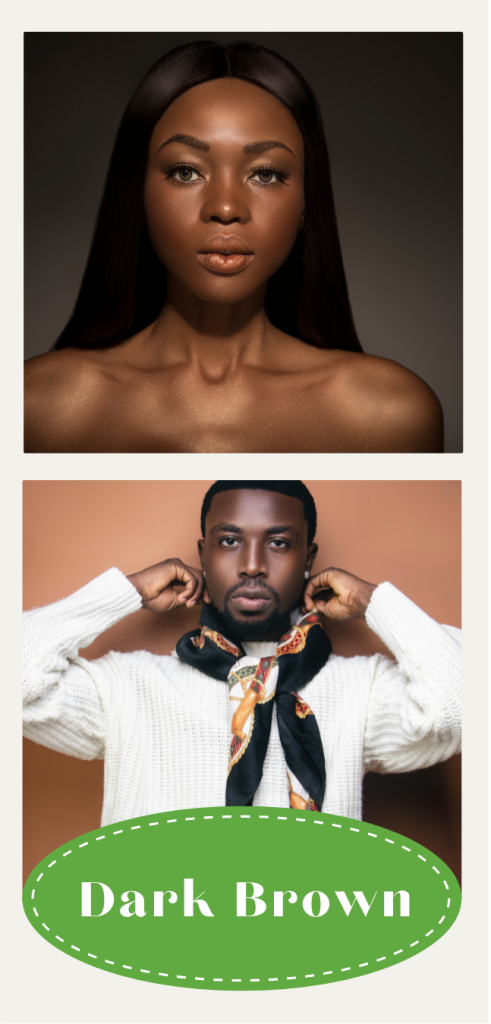
- Type VI: Dark Brown, never burns, deeply pigmented, always tans.
Skin Tone Type I – Very Fair
If you have skin tone Type I you are usually pale, prone to freckles, have light-coloured eyes, and blonde or red hair. You burn very easily, don’t tan, and have a high risk of sun damage and skin cancer. You are also more likely to develop freckles, age spots, and signs of ageing.
Main challenges for Type I skin tone
Studies have shown that this skin tone type has a particular kind of melanin – a yellow-red form called pheomelanin – which is more prone to developing skin cancer. This is regardless of UV exposure.
- Sun damage: you are more likely to burn and develop signs of ageing from sun damage.
- Skin cancer: you are at higher risk of skin cancer, including melanoma.
- Melanoma risk: due to the high sensitivity to UV rays, you are at a higher risk of developing melanoma, a serious form of skin cancer.
- Environmental damage: you are more susceptible to environmental elements such as pollution and harsh chemicals.
- Redness, irritation, and dryness: you are prone to redness, irritation, and dryness.
- Freckles: you are more likely to appear on this skin type, especially with sun exposure.
- Premature ageing: excessive sun exposure can lead to visible signs of ageing like wrinkles and fine lines on your skin much faster than other skin types.
- Visible Veins and Blood Vessels: your fair skin can sometimes show veins and capillaries more prominently, which may be a concern for some people.
- Discoloration Issues: conditions like melasma, where brown patches can appear on your face, and are particularly noticeable on your fair skin.
- Finding Makeup Shades: matching makeup to your very light skin tone can be challenging, as many products may be too dark or have an unnatural undertone.

Skincare tips for Type I skin tone
You need to be extremely vigilant in protecting your skin from the sun and you are more vulnerable to serious damage and premature ageing than others.
- Protect your skin from the sun with a high-quality, medical-grade sunscreen with an SPF of at least 30.
- Use a potent Vitamin C serum, or one with ingredients high in carotenoids, to help protect from sun exposure.
- Apply a moisture sealing agent like a hyaluronic acid to seal your natural moisture in.
- At nighttime, apply Vitamin A or Bakuchiol (which is vegan and photostable) to speed up your skin renewal cycle.
- Spot-test a product behind your ear or upper inner arm to make sure you don’t react to the product.
Skin Tone Type II – Fair
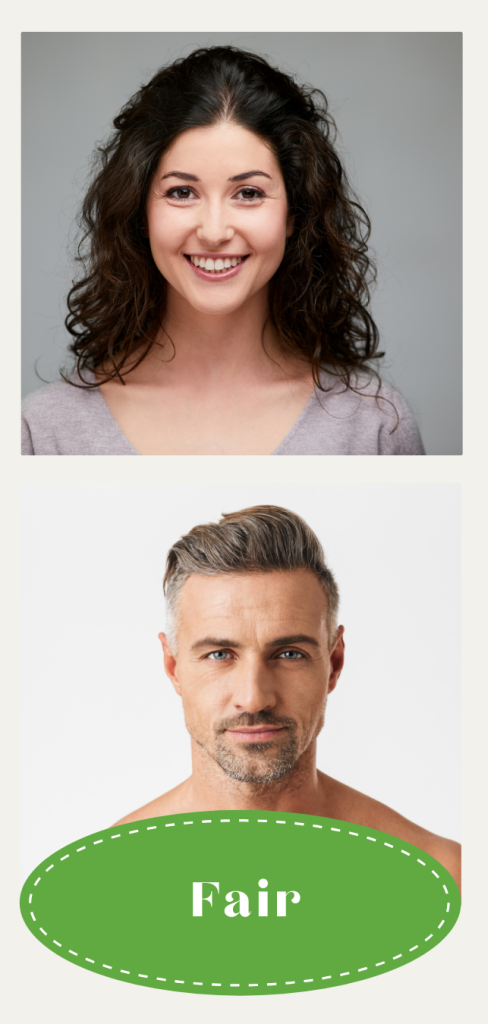
If you have a Type II skin tone, you are usually fair with blue or green eyes, light or fair skin and often face challenges like easily burning in the sun and developing freckles. You manage to get a light tan with repeated exposure to the sun but have a high risk for skin cancer (including melanoma, the deadliest type of skin cancer).
Main challenges for Type II skin
You have a high susceptibility to sun damage, and premature ageing due to excessive sun exposure; making sun protection a crucial aspect of your skincare routine.
- Sunburns: you burn very easily with minimal sun exposure and may not tan easily, leading to a high risk of sunburn.
- Freckles: Freckles are more likely to appear on this skin type, especially with sun exposure.
- Melanoma risk: Due to the high sensitivity to UV rays, people with Type II skin are at a higher risk of developing melanoma, a serious form of skin cancer.
- Premature ageing: Excessive sun exposure can lead to visible signs of ageing like wrinkles and fine lines on Type II skin much faster than other skin types.
- Visible Veins and Blood Vessels: Fair skin can sometimes show veins and capillaries more prominently, which may be a concern for some people.
- Discolouration Issues: Conditions like melasma, where brown patches appear on the face, can be particularly noticeable on fair skin.
- Finding Makeup Shades: Matching makeup to a very light skin tone can be challenging, as many products may be too dark or have an unnatural undertone.
Skincare tips for Type II skin
We recommend you take extreme care, use sunscreen or sun protection skincare and protect yourself from harmful UV rays. Extreme sun exposure can result in serious damage, premature ageing, and skin cancers such as squamous cell carcinoma SCC, Basal cell Carcinoma BCC and Melanoma.
- High SPF sunscreen: Always use a broad-spectrum sunscreen with SPF 30 or higher daily, even on cloudy days.
- Protective clothing: Wear hats and sunglasses to protect the face and eyes from the sun.
- Antioxidant-rich products: Incorporate skincare products with antioxidants like vitamin C to combat free radical damage caused by sun exposure.
- Gentle cleansers and moisturizers: Choose mild cleansing products and hydrating moisturizers to maintain skin health.
- At night, apply Vitamin A or Bakuchiol (which is vegan and photostable), to speed up your skin renewal cycle.
- Regular skin checks: Consult a dermatologist for regular skin examinations to monitor for any potential skin concerns.
Skin Tone Type III – Medium
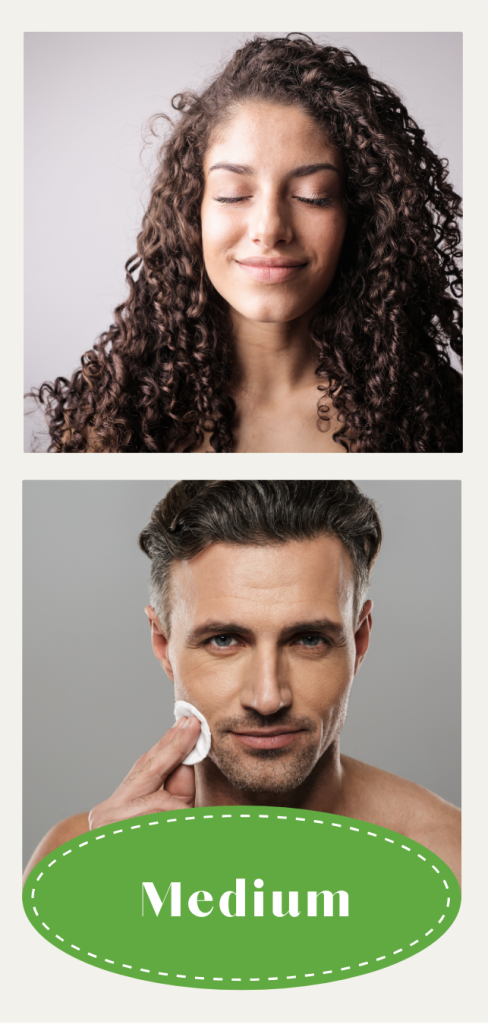
If you have a Type III skin tone, you may sometimes burn and tan to a light bronze, but your risk for skin cancer remains higher than average.
Main challenges for Type III skin
You may have sensitive skin and can experience skin damage, hyperpigmentation, and skin cancer. You are susceptible to basal cell carcinoma and squamous cell carcinoma.
- Sunburn: you can burn, but it usually tans after a burn.
- Premature ageing: Sun exposure can cause deepened facial lines, wrinkles and other signs of ageing, like Acne scarring, Red spots and blood vessels, Leg veins and varicose veins, moles, lumps, and bumps.
- Skin cancer: are at higher risk of basal cell carcinoma, squamous cell carcinoma, and melanoma.
- Hyperpigmentation & Dark spots: may be more likely to develop pigmentation spots.
Skincare tips for Type III skin
We recommend you use sunscreen, or sun protection skincare, and protect yourself from harmful UV rays. Extreme sun exposure can result in serious damage, premature ageing, and life-threatening skin cancers, including melanoma.
- Use sunscreen/sun protection daily to protect your skin from sun damage.
- Consider skincare treatments to help reverse sun damage and signs of ageing.
- Consider skincare treatments to help even out skin tone and texture.
- Be careful about aggressive treatments like CO2 laser, Erbium Yag laser, and Phenol peels, which can cause permanent hyperpigmentation.
Skin Tone Type IV – Olive
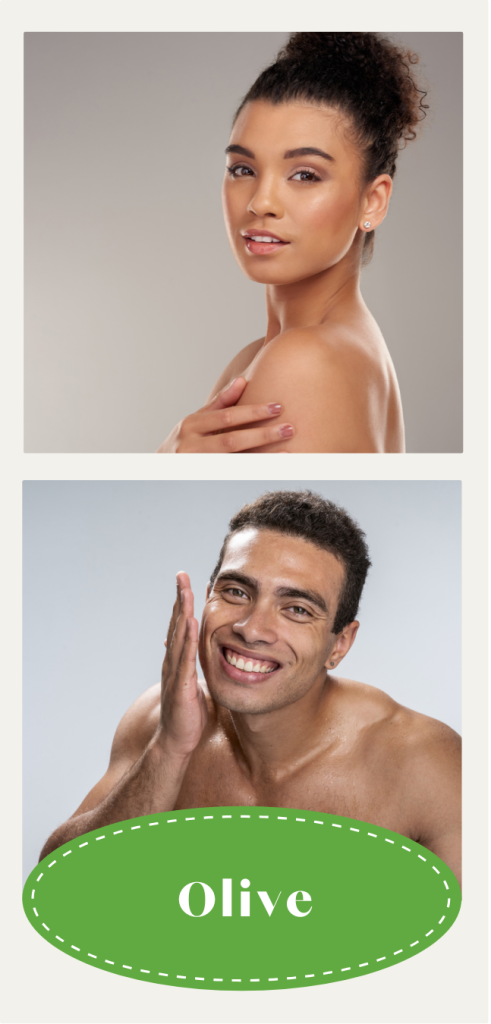
If you have a Type IV skin tone, you typically tan easily and seldom get burned. Your risk of developing skin cancer is less than those with skin types I, II and III, but still present.
Main challenges for Type IV skin
You can experience sun damage, hyperpigmentation, and uneven skin tone. Also, you can be prone to an overactive production of melanin following sun exposure which can result in the uneven pigmentation of melasma. Especially, if you are on hormonal therapy such as the oral contraceptive, or during pregnancy.
Sun damage
- Burns: While people with type IV skin rarely burn, they can still burn if they spend too much time in the sun
- Skin ageing: Sun exposure can cause wrinkles and other signs of ageing
- Melanoma: People with type IV skin can develop melanoma and other skin cancers
Hyperpigmentation
- Dark patches: People with type IV skin can develop dark patches on their skin
- Uneven pigmentation: People with type IV skin can experience uneven pigmentation
Other skin challenges
- Darkening or lightening: People with type IV skin can experience darkening or lightening of their skin
- Scarring: People with type IV skin can develop permanent discolouration or scarring
Skincare tips for Type IV skin
We recommend you should still take care by using sunscreen or sun protection skincare, and protect yourself from harmful UV rays. Extreme sun exposure can result in serious damage, uneven skin tone, premature ageing, and possible skin cancers.
- Use a broad-spectrum sunscreen with SPF 30-50
- Wear sunglasses
- Use products with retinoids like Vitamin A or Bakuchiol (which is vegan and photostable) to help prevent hyperpigmentation
- Use products with antioxidants and niacinamide to maintain skin elasticity.
Skin Tone Type V – Brown
If you have a Type V skin tone, you can tan easily and very rarely burn.
Main challenges for Type V skin
You can experience several skin challenges, including hyperpigmentation, keloids, acne, eczema, dermatitis, psoriasis and seborrheic dermatitis (dandruff) which can lead to potential problems with pigmentation, or uneven darkening or lightening of skin, as the formation of melanin is a dynamic process and responds to various stimuli.
- Sun damage: even though you tan easily and rarely burn, you can experience sun damage. This adds to hyperpigmentation or hypopigmentation.
- Hyperpigmentation: you can experience hyperpigmentation, or uneven darkening of skin colour from laser hair removal, or laser resurfacing chemicals.
- Hypopigmentation: your skin type can also produce less pigmentation or lightened areas, after a burn or other type of injury to your skin.
- Keloids: you have a greater risk of developing keloids, which are raised, often large scars. There is a great risk of keloid (raised, often large scars) development because darker skin has a better bed of collagen. Studies suggest that the fibroblasts which make collagen, are larger and more numerous and active. Damage to darker skin is therefore associated with a greater incidence of keloids and hypertrophic scars.
- Post Inflammatory Hyperpigmentation (PIH): your skin is more reactive to an injury which can lead to dark marks called PIH and can take years to fade. That’s why wearing sunscreen, or sun protection skincare, is essential.
- Acne: you can experience acne (comedones – blocking of the hair follicles), which can also lead to hyperpigmentation.
- Dryness: you are more prone to skin dryness. Bleaching agents can cause dryness, irritation, and hyperpigmentation.
Skincare tips for Type V skin
Even though skin cancer is not common among people with your skin tone type, you should still take the necessary precautions to protect your skin against skin cancer, uneven skin tone and pigmentation.
We recommend you take steps to protect your skin, such as wearing sunscreen, or sun protection skincare, avoiding the sun when it’s strongest, and wearing protective clothing. You can also use a vitamin C antioxidant serum, one with ingredients high in carotenoids, and a moisturiser.
- Use a broad-spectrum sunscreen with SPF 30-50, or sun protection skincare, to prevent hyperpigmentation
- Use a lightweight moisturiser to prevent dryness and dullness
- Use serums with vitamin E and niacinamide to promote even skin tone
- Use antioxidants like green tea extract and liquorice root extract
- Exercise caution with certain treatments, such as IPL
- Visit a dermatologist annually to check for any hidden skin problems.
Skin Tone Type VI – Dark Brown
If you have a Type VI skin tone, you have a dark skin colour and are usually of African descent. Your skin rarely burns and your risk of skin cancer is low. Still, you should protect yourself from the sun to avoid an uneven skin tone and pigmentation.
Main challenges for Type VI skin
Your skin tone reacts to common conditions such as acne, eczema, dermatitis, and psoriasis.
- Hyperpigmentation: you can experience hyperpigmentation, or uneven darkening of skin colour from laser hair removal, or laser resurfacing chemicals.
- Hypopigmentation: your skin type can also produce less pigmentation or lightened areas, after a burn or other type of skin injury. Injuries can cause your skin to produce less pigmentation resulting in lighter patches of skin.
- Post Inflammatory Hyperpigmentation (PIH): your skin is more reactive to an injury which can lead to dark marks called PIH which can take years to fade. PIH may be caused by acne, eczema, dermatitis, psoriasis, and burn injuries which lead to dark marks appearing where the injury occurred.
- Acral lentiginous melanoma: your skin also has a greater risk of developing acral lentiginous melanoma. These tend to appear on parts of the body that aren’t exposed to the sun. They often remain undetected until after the cancer has spread. This is why you must inspect your body from head to toe. You must pay careful attention to any suspicious growths, especially on your palms, soles, and mucous membranes like the inside of your mouth.
- Keloids: you have a greater risk of developing keloids, which are raised, often large scars. There is a great risk of keloid (raised, often large scars) development because darker skin has a better bed of collagen. Studies suggest that the fibroblasts which make collagen, are larger and more numerous and active. Damage to darker skin is therefore associated with a greater incidence of keloids and hypertrophic scars.
- Sun damage: UV exposure can lead to dark spots and premature ageing.
- Skin cancer: can occur, but at a lower level. Signs of skin cancer include:
- A spot that appears darker than the rest of the skin
- A slow-healing wound that continually crusts over and bleeds
- A patch of skin that feels rougher than the rest
Skincare tips for Type VI skin
- Use a broad-spectrum sunscreen with SPF 30-50, or sun protection skincare, to prevent hyperpigmentation
- Use a lightweight moisturiser to prevent dryness and dullness
- Use serums with vitamin E and niacinamide to promote even skin tone
- Use antioxidants like green tea extract and liquorice root extract
- Exercise caution with certain treatments, such as IPL
- Visit a dermatologist annually to check for any hidden skin problems.
Conclusion
So, as you have read, the greatest effect of ageing is primarily related to differences in pigmentation. High levels of pigmentation are more protective against the effects of photo ageing, with Brown and Dark Brown skin showing little cutaneous difference between exposed and unexposed sites.
If sensitivity is measured in terms of skin cancer incidence, skin cancer rates between fair and dark-skinned people indicate that pigmentation provides a level of protection from UV radiation. Basal cell carcinoma and squamous cell carcinoma occur almost exclusively on sun-exposed skin of light-skinned people.
Darker skin is more compacted than light skin, as well as having a higher intercellular lipid content, which may contribute to more resistance to ageing. Wrinkling in medium and olive-skinned people occurs later and with less severity than in light-skinned people.
References
Google Search Labs, n.d. [Online] Available at: https://www.google.com [Accessed 22 Feb 2025].
Herb and Hedgegrow Ltd., 2016. Intrinsic Ageing, s.l.: s.n.
Skinrenewal, n.d. Fitzpatrick Skin Types. [Online] Available at: https://www.skinrenewal.co.za/ [Accessed 22 Feb 2025].